
A security guard typically monitors premises to deter crime, while a security officer often has more authority and strategic responsibilities. Security officers may oversee security operations and manage teams.
Understanding the distinction between a security guard and a security officer is crucial for businesses seeking to enhance their security measures. Security guards serve as the eyes and ears on the ground, providing a visible deterrent to criminal activity and responding to immediate threats or emergencies.
They patrol properties, enforce rules, and ensure the safety of an area. On the other hand, security officers often hold higher-ranking positions that involve planning, developing, and implementing security protocols. They play a key role in crisis management, often requiring a deeper knowledge of legal regulations and security technology.
Choosing the right level of security service is vital for any organization aiming to protect its assets and maintain a safe environment for its employees and visitors.
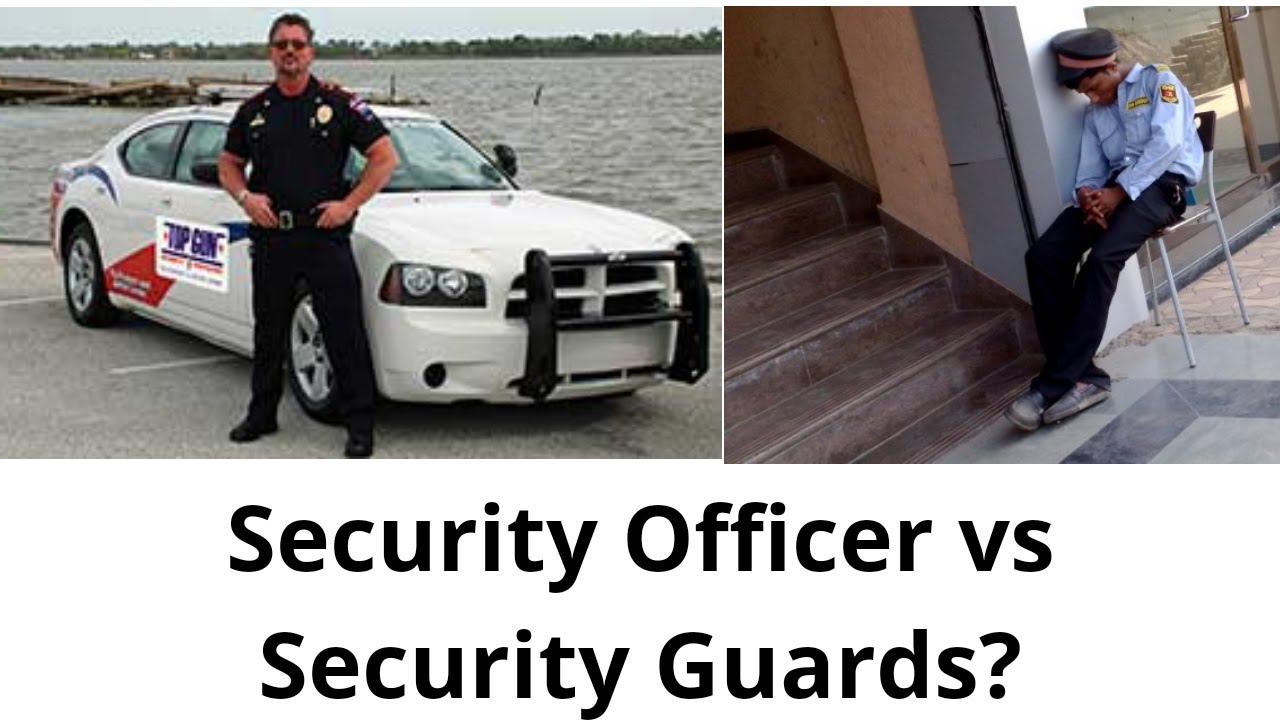
Introduction To Security Roles
Introduction to Security Roles shines a light on two crucial positions: Security Guard and Security Officer. Both roles play a vital part in keeping places safe.
Yet, they have different tasks and responsibilities. This section will explore these roles, their importance, and clear up some common misunderstandings.
The Importance Of Security
Security guards and officers keep us safe. They protect people, property, and information. Their presence deters crime and provides a sense of safety. In emergencies, they are the first responders. Thus, their role is critical in our daily lives.
Common Misconceptions
Security guards are not the same as security officers.
Both roles require different skills and training.
Security officers often have more responsibilities than guards.
Not all security professionals carry weapons.
Understanding these roles helps appreciate their contribution to safety.

Historical Evolution Of Security Professions
The historical evolution of security professions has been a fascinating journey. From early human societies to the present day, the need for security has shaped careers and roles. This evolution reflects changes in society, technology, and threats.
Let’s explore this transformation under two main periods: early security measures and modern security dynamics.
Early Security Measures
Security dates back to ancient civilizations. Guards protected assets, like food and treasures. They were the eyes and ears of communities. Over time, roles expanded. Guards became responsible for enforcing laws and maintaining order.
City walls and moats were early security strategies.
Watchmen patrolled streets in medieval towns.
Roles were often passed down within families, creating a tradition.
Modern Security Dynamics
The 20th century brought significant changes. Security roles became more specialized. Technology began to play a key role. The term ‘Security Officer’ emerged, indicating a more professional and strategic role.
Guard | Officer |
|---|---|
Focuses on basic protection | Handles complex security systems |
May require minimal training | Often needs formal education |
Patrols and monitors | Plans and manages security measures |
Today’s security officers use advanced tools like surveillance cameras and access control systems. They analyze risks and create security plans.
They work in various settings, from malls to corporate buildings.
Defining A Security Guard
Understanding the role of a security guard is crucial. Guards ensure safety and peace. They act as watchful protectors in various settings.
Let’s explore their key responsibilities and typical work environments.
Primary Responsibilities
- Monitor premises to prevent theft, violence, or infractions.
- Report irregularities, inform violators of policy and procedures.
- Control access for employees, visitors, and outside contractors.
- Conduct security checks over a specified area.
- Respond to emergencies to provide necessary assistance.
- Operate detecting devices to screen individuals and prevent passage of prohibited articles.
Typical Work Environments
Security guards work in diverse settings. Each environment demands vigilance and a sharp eye.
Here are the most common places you’ll find them:
Environment | Description |
|---|---|
Retail Stores | Guards protect against shoplifting and ensure shopper safety. |
Corporate Buildings | They manage entry points and maintain a safe work environment. |
Hospitals | Security is vital for patient and staff protection. |
Events | Guards manage crowds and handle disturbances at large gatherings. |
Educational Institutions | They safeguard students and faculty, ensuring a secure learning space. |
Defining A Security Officer
A Security Officer holds a vital role. This position goes beyond standard guard duties. It involves a blend of strategy and leadership. Security Officers oversee safety measures. They ensure environments are secure.
Let’s delve into their core responsibilities and leadership roles.
Core Duties
Conduct regular patrols: They check for irregularities.
Monitor surveillance: They keep an eye on CCTV systems.
Report incidents: They document all security breaches.
Enforce laws: They ensure rules are followed.
Respond to emergencies: They act fast in critical situations.
Leadership And Management Roles
Security Officers lead teams. They manage staff schedules. Training is also key. They develop security plans. Officers work with management. They implement security policies.
Let’s break down these roles.
Role | Responsibility |
|---|---|
Team Leadership | Guide and motivate security personnel. |
Scheduling | Organize shifts and coverages. |
Training | Conduct sessions on security procedures. |
Strategy Development | Create comprehensive security protocols. |
Policy Implementation | Enforce company-wide security measures. |
Educational Requirements
Educational requirements set apart security guards and security officers. Each role demands specific training and skills. Understanding these can guide career choices in security.
Training For Security Guards
Security guard training often covers basic skills. These include surveillance, report writing, and emergency procedures. Most states require a high school diploma or equivalent. They also mandate a set number of training hours. These are completed through certified programs.
- First aid and CPR certification
- Conflict de-escalation techniques
- Property rights and legal aspects
- Patrolling and observation methods
On-the-job training is common. Employers provide it to tailor skills to specific sites or situations.
Advanced Qualifications For Security Officers
Security officers often hold higher positions. They need advanced qualifications. These include college degrees or equivalent experience. Degrees in criminal justice or law enforcement are beneficial.
Qualification | Details |
|---|---|
Leadership training | For managing teams and making critical decisions |
Risk assessment skills | To identify and mitigate potential threats |
Advanced technology use | For cyber security and surveillance systems |
Legal knowledge | Understanding laws related to security work |
Many security officers also get certifications. These are from recognized security organizations. They demonstrate expertise and commitment to the field.
Legal Authority And Power
Understanding the legal authority and power of security personnel is crucial. This section delves into the differences between security guards and security officers. Specifically, we focus on their legal limits and jurisdictions.
Limits Of A Security Guard
Security guards work to protect property and people. Yet, their power is limited. They cannot arrest people like police do. Instead, they can only detain someone until police arrive. Their main role is to observe, report, and act within their site’s boundaries.
- Detain but not arrest
- Observe and report incidents
- Act within specific locations
Security Officers And Legal Jurisdiction
Security officers often have more training than guards. They might manage a team of guards. In some cases, they have special permissions. For example, they might work with law enforcement more closely. This can include gathering evidence or making citizen’s arrests.
Role | Training | Permissions |
|---|---|---|
Security Guard | Basic | Limited |
Security Officer | Advanced | Special |
Both roles aim to keep people safe. Yet, their legal powers differ greatly.
Armed Vs Unarmed Positions
In the security field, positions vary widely. A key difference is whether the role is armed or unarmed.
Each has unique responsibilities and required training. Let’s explore these roles in detail.
Arming Security Guards
Arming security guards enhances protection levels. It requires careful consideration. Factors include location risk and client needs. Guards must hold licenses for carrying weapons. Their presence aims to deter potential threats effectively.
Key points:
- License necessity: Guards must have valid permits.
- Risk assessment: High-risk areas often need armed guards.
- Deterrence: Visible arms can prevent incidents.
Firearm Training For Security Officers
Security officers with firearms undergo rigorous training. They must pass background checks and complete safety courses. Training includes weapon handling and judgmental shooting. Officers must requalify periodically to maintain their skills.
Training Component | Details |
|---|---|
Background Check | Ensures officer reliability |
Safety Course | Covers basic firearm use |
Weapon Handling | Includes maintenance and operation |
Judgmental Shooting | Teaches decision-making in use of force |
Periodic Requalification | Keeps skills sharp over time |
Salary And Career Progression
Understanding salary and career progression is key. It helps you choose between a security guard and a security officer. This section explores their compensation and advancement.
Compensation Comparisons
Security guards and officers earn different salaries. Their pay depends on experience, location, and employer. Let’s break down their earnings.
Position | Entry-Level Salary | Mid-Level Salary | Senior-Level Salary |
|---|---|---|---|
Security Guard | $20,000 | $28,000 | $35,000 |
Security Officer | $25,000 | $35,000 | $50,000 |
Security officers typically earn more. They often have more responsibilities. A guard’s earnings increase with experience.
Advancement Opportunities
Career growth is possible for both positions. Security guards can become officers. Officers can move into management roles.
Below are the steps for career progression.
Security Guard
Become a lead guard
Gain supervisor title
Advance to security officer
Security Officer
Shift into a senior officer role
Move up to a security manager
Become a director of security
Training and certifications improve advancement chances. Networking and leadership skills are also important.
Workplace Scenarios And Decision Making
In the realm of security, every decision counts. Security guards and officers face unique challenges daily. They must make quick, effective decisions. The roles they play may differ, but their decision-making impacts safety and order.
On-the-ground Decision Making
Security guards tackle immediate issues. Their decisions often involve:
- Assessing threats quickly
- Responding to emergencies
- Enforcing rules firmly
They stay alert, ready to act. Their choices can prevent harm and ensure peace.
Strategic Planning And Crisis Management
Security officers focus on the big picture. Their decisions shape:
- Security policies
- Emergency plans
- Team training
They plan ahead, keeping workplaces safe from future threats. Their strategies guide teams during crises.
Technology And Modern Security
Technology and Modern Security play crucial roles today. They help keep places safe. Tech tools and smart systems make security work better.
Let’s explore how they do this for guards and officers.
Tech Tools For Guards
Security guards use many tech tools. These tools help them do their job well.
Here are some key tools:
- Cameras: They watch over places all the time.
- Alarms: They alert guards when something is wrong.
- Radio Systems: Guards talk to each other with these.
- Flashlights: They light up dark places at night.
These tools make guards ready for anything. They can see danger early and talk fast.
Officers And Security Technology Integration
Security officers manage big security plans. They use advanced tech. Here’s how:
Technology | Use |
|---|---|
Software Systems | They keep data safe. |
Biometrics | They check who comes in. |
Drones | They fly and watch from above. |
Officers use these to plan better. They make sure everyone is safe. Tech helps them see everything.
Case Studies: Guards And Officers In Action
Security guards and officers play crucial roles in safety. Their actions can make a real difference.
Let’s explore real-world scenarios where they have shined or learned valuable lessons.
Success Stories
- A guard at a mall spots a fire. He quickly evacuates shoppers. No injuries are reported.
- An officer notices a suspicious package at an airport. The bomb squad is alerted. The package is harmless.
- Regular patrols by officers at a festival keep the peace. Attendees feel safe.
- Guards at a bank deter potential robbers. Their presence is key.
Learning From Failures
Incident | Lesson |
|---|---|
A guard ignores an alarm. A theft occurs. | Always investigate alarms. |
An officer is distracted on duty. A breach happens. | Stay alert at all times. |
- After a failure, guards receive more training.
- Officers practice new protocols. Safety improves.
Choosing The Right Path In Security
Deciding between a security guard and a security officer is crucial. Each role has distinct responsibilities and requires a specific skill set. Understanding these differences helps in making an informed career choice in the security field.
Self-assessment For Aspiring Professionals
Self-assessment is the first step towards a security career. Potential candidates must evaluate their skills and interests.
Key traits for these roles include:
- Attention to detail for spotting security breaches
- Physical fitness for patrolling and emergency responses
- Problem-solving skills to handle incidents effectively
- Communication skills for reporting and teamwork
Use the list above to gauge your suitability for each security role. Match your skills with the job requirements. This process guides your career path choice.
The Future Of Security Jobs
The security industry is evolving with technology. Automation and AI are shaping new job opportunities. The demand for tech-savvy security professionals is rising.
Future security roles may include:
Job Title | Required Skills | Future Outlook |
|---|---|---|
Digital Security Analyst | Cybersecurity knowledge, analytical thinking | High demand |
Drone Surveillance Operator | Drone piloting, technical proficiency | Growing field |
Security Systems Engineer | IT skills, system management | Essential role |
These roles require continuous learning and adaptability. Stay ahead by embracing new security technologies. Investing in tech skills secures your future in the industry.
Conclusion: The Symbiotic Relationship
The roles of security guards and security officers often overlap. Together, they create a strong safety net for the places they protect. This teamwork is vital for keeping people and properties safe.
Let’s explore how these roles balance and what the future holds for security work.
Balancing The Roles
Security guards and officers have different tasks, yet they share goals. Security guards often patrol and report unusual activities. They are the eyes on the ground.
Security officers, on the other hand, create safety plans and manage teams. They use their big-picture view to keep things running smoothly. Both roles need good communication and quick thinking.
- Security guards watch and report.
- Security officers plan and manage.
Together, they form a complete safety team. Their skills complement each other. This balance makes sure everyone stays safe.
Future Trends In Security
The security field is changing fast. New technology helps guards and officers do their jobs better. For example, cameras and alarms give real-time information.
Drones can patrol large areas quickly. Artificial Intelligence (AI) can spot risks faster than human eyes.
- Technology helps with fast, accurate information.
- Drones and AI add extra layers of safety.
As technology grows, the roles of guards and officers will change. They will use new tools to protect people better. The future of security looks smart and strong.
Credit: smartsecuritypros.com
Frequently Asked Questions
What Is A Security Officer Called?
A security officer is often referred to as a security guard or private patrol officer.
What Makes A Security Officer?
A security officer ensures safety by monitoring premises, detecting threats, and responding to emergencies with diligence and appropriate actions. They require training, vigilance, and often, a license to operate effectively.
What Is The Meaning Of Security Officer?
A security officer is responsible for protecting property, people, and assets through preventive measures and emergency response.
What Is The Highest Position In Security?
The highest position in security is the Chief Security Officer (CSO). This role oversees an organization’s security policies and procedures. The CSO ensures protection against threats and manages security teams.
Conclusion
Deciding between a security guard and security officer depends on your specific needs. Each role offers unique benefits tailored to various security situations.
Remember, the right choice enhances safety and peace of mind. Carefully consider your requirements to select the best security solution for your scenario.
Safety isn’t one-size-fits-all; it’s about finding the perfect fit for your environment.